
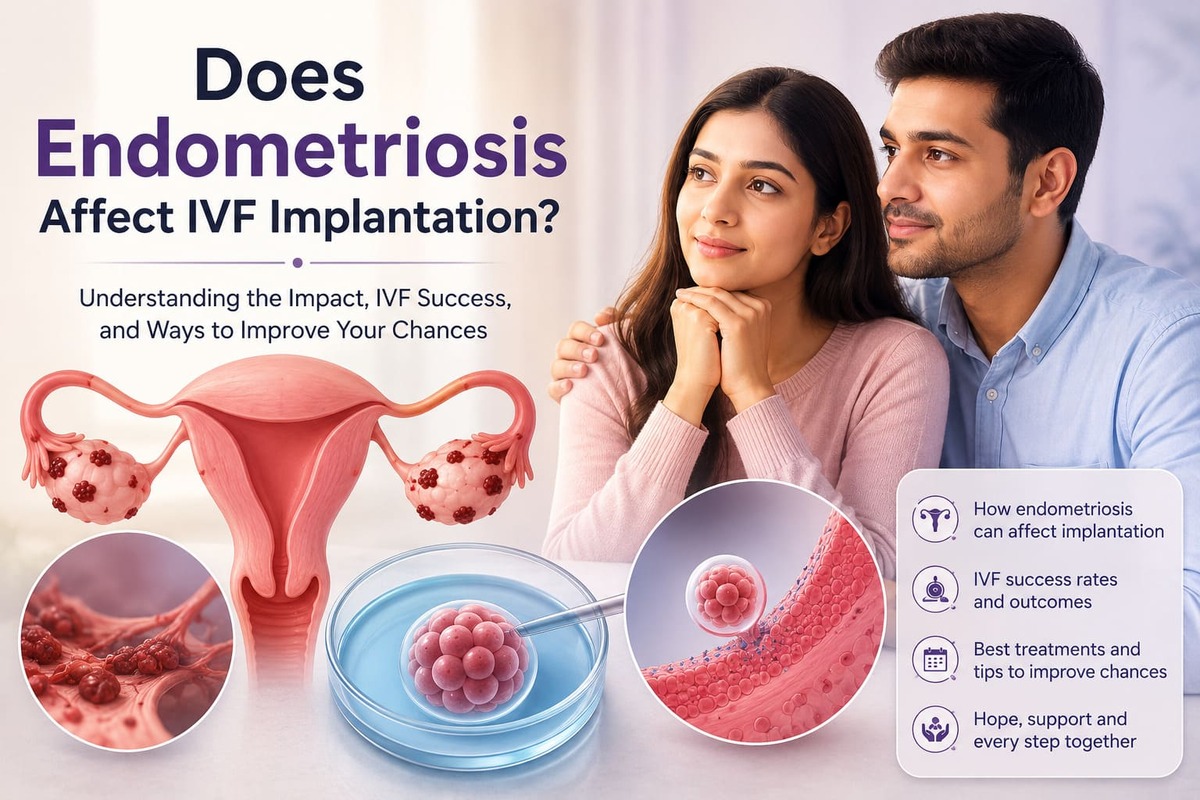
“Doctor, my embryos were good. Then why didn’t implantation happen?”
This is one of the most common questions fertility specialists hear from couples struggling with endometriosis.
If you’ve been diagnosed with endometriosis and are planning IVF, it’s natural to worry. You may have searched Google for questions like:
- Does endometriosis reduce IVF success?
- Can an embryo implant if I have endometriosis?
- Should I undergo surgery before IVF?
- Is pregnancy possible with Stage 4 endometriosis?
The good news is that endometriosis does not mean you can never become pregnant. Thousands of women with endometriosis become mothers every year, either naturally or with the help of IVF.
However, endometriosis can make implantation more difficult in some women. Understanding how it affects your body can help you make informed decisions and improve your chances of a successful pregnancy.
In this guide, we’ll explain everything in simple English so you can understand the relationship between endometriosis and IVF implantation without getting lost in medical terms.
A Story That Many Couples Can Relate To
When Sneha and Karan from Ahmedabad got married, they dreamed of starting a family within a couple of years. But after three years of trying, pregnancy never happened.
Sneha had painful periods since college, but she thought it was normal. During her fertility evaluation, doctors diagnosed her with Stage 3 endometriosis.
The couple decided to undergo IVF. Their first cycle produced two healthy embryos, and everyone felt hopeful. Unfortunately, the pregnancy test after embryo transfer was negative.
Instead of giving up, their fertility specialist investigated further. The doctor explained that inflammation caused by endometriosis might have affected implantation. After a few months of treatment to prepare the uterus, Sneha underwent a frozen embryo transfer.
This time, the embryo implanted successfully, and nine months later, the couple welcomed a healthy baby girl.
Every couple’s journey is different, but stories like Sneha and Karan’s remind us that one unsuccessful attempt does not define your future.
What Is Endometriosis?
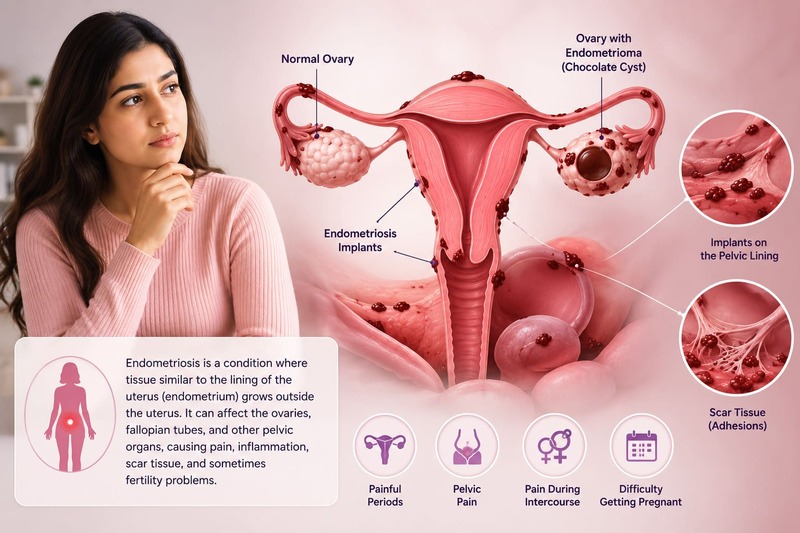
Inside the uterus is a tissue called the endometrium. Every month, this tissue becomes thicker to prepare for pregnancy. If pregnancy does not happen, it sheds during menstruation.
In women with endometriosis, tissue similar to the endometrium grows outside the uterus. It may grow on:
- Ovaries
- Fallopian tubes
- Pelvic lining
- Bladder
- Intestines
Just like the normal uterine lining, this tissue responds to hormones every month. The difference is that it has nowhere to go, leading to inflammation, scarring, and pain.
Think of it like a plant growing in the wrong place in your garden. Even though it’s the same plant, it can disturb everything around it. Endometriosis behaves in a similar way inside the body.
How Common Is Endometriosis?
Many women are surprised to learn that endometriosis is not a rare condition.
Studies estimate that:
- Around 1 in 10 women of reproductive age has endometriosis.
- Nearly 30–50% of women with endometriosis experience infertility.
- Many women are diagnosed 5 to 10 years after symptoms begin, as the condition is often mistaken for normal menstrual pain.
This is why early diagnosis is important, especially for women planning pregnancy.
What Are the Symptoms of Endometriosis?
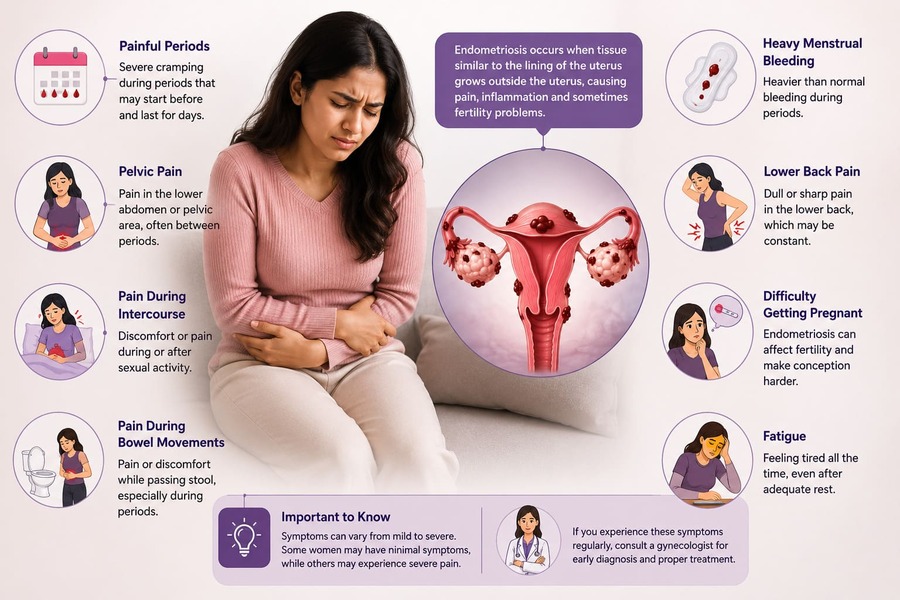
Not every woman experiences the same symptoms.
Some women have severe pain but mild disease, while others have advanced endometriosis without noticeable symptoms.
Common symptoms include:
- Painful periods
- Pain during intercourse
- Heavy menstrual bleeding
- Pelvic pain between periods
- Pain during bowel movements
- Difficulty becoming pregnant
- Chronic lower back pain
If you have these symptoms and have been trying to conceive for over a year, it is worth discussing endometriosis with your gynecologist.
Does Endometriosis Affect Fertility?
The answer is yes, but the effect varies from one woman to another.
Pregnancy depends on several factors working together. The egg must be healthy, sperm must fertilize it, the embryo must grow properly, and finally, it must implant inside the uterus.
Endometriosis can interfere with several of these steps.
How Endometriosis Can Affect Fertility
| Problem | How It Affects Pregnancy |
|---|---|
| Inflammation | May create an unhealthy environment for fertilization and implantation. |
| Scar tissue | Can block or damage the fallopian tubes. |
| Ovarian cysts | May reduce the number of healthy eggs. |
| Hormonal changes | Can affect embryo implantation. |
| Reduced ovarian reserve | May lower the number of eggs available for IVF. |
Remember, not every woman experiences all these problems. Some women with mild endometriosis conceive naturally without any fertility treatment.
Does Endometriosis Affect IVF Implantation?
This is the question most couples want answered.
The short answer is:
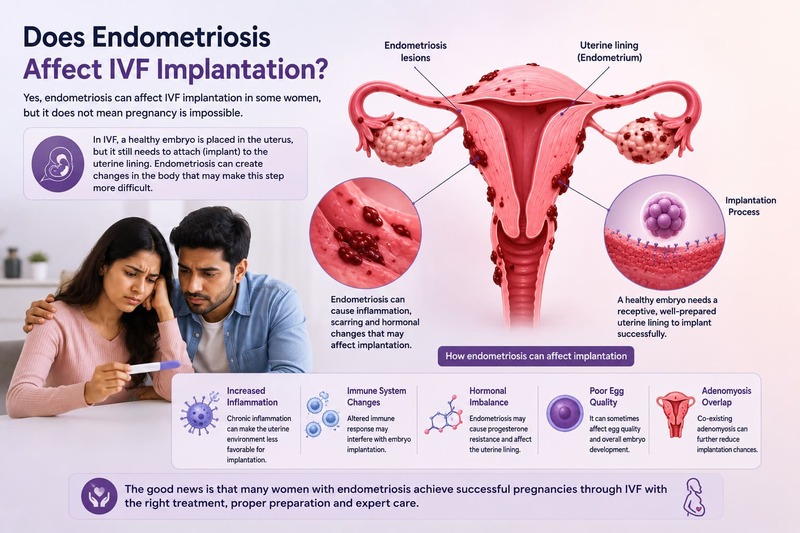
Yes, it can—but it does not always prevent implantation.
Many people believe IVF completely bypasses endometriosis because fertilization happens in the laboratory.
While IVF helps overcome problems such as blocked fallopian tubes, the embryo still needs to attach to the lining of the uterus.
This process is called implantation.
For implantation to happen successfully, the uterus needs to be healthy and ready to accept the embryo.
In some women with endometriosis, this environment may not be ideal.
Why Implantation May Be More Difficult
Doctors believe several factors may reduce implantation in women with moderate or severe endometriosis.
1. Increased Inflammation
Endometriosis causes ongoing inflammation inside the pelvis.
Inflammation may affect communication between the embryo and the uterine lining during implantation.
Think of it like trying to plant a seed in soil that has not been prepared properly. The seed may still grow, but the conditions are less favorable.
2. Hormonal Changes
Successful implantation depends on the hormone progesterone.
Some women with endometriosis develop what doctors call progesterone resistance, meaning the uterus may not respond as effectively to this important hormone.
As a result, the uterine lining may not become fully receptive when the embryo is transferred.
3. Changes in the Immune System
The immune system normally helps support early pregnancy.
Endometriosis may change the activity of certain immune cells, making implantation more challenging in some women.
Researchers are still studying exactly how this process works.
4. Poor Egg Quality
Although not true for everyone, severe endometriosis may affect egg quality in some women.
Poor-quality eggs are more likely to produce embryos that stop developing before implantation.
5. Adenomyosis
Some women with endometriosis also have adenomyosis, a condition where tissue grows into the muscular wall of the uterus.
Adenomyosis can further reduce implantation rates, which is why doctors often evaluate both conditions before IVF.
Does Every Woman With Endometriosis Have Implantation Failure?
Absolutely not.
This is an important point.
Many women with endometriosis have healthy pregnancies during their very first IVF cycle.
Others may need additional treatment before embryo transfer.
Several factors influence implantation, including:
- Age
- Egg quality
- Sperm quality
- Embryo quality
- Stage of endometriosis
- Uterine health
- Lifestyle habits
Endometriosis is only one piece of the puzzle.
Understanding the Different Stages of Endometriosis:
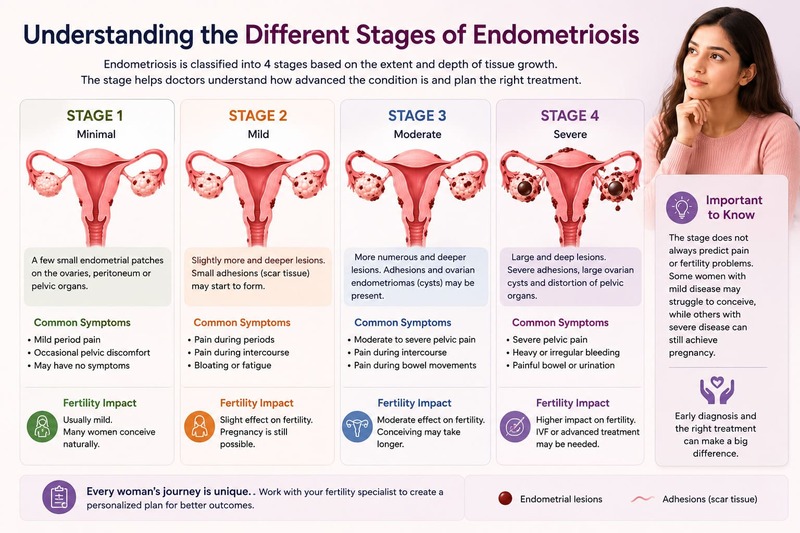
Doctors classify endometriosis into four stages.
| Stage | Severity | Fertility Impact |
| Stage 1 | Minimal | Usually mild |
| Stage 2 | Mild | Slight effect |
| Stage 3 | Moderate | Moderate effect |
| Stage 4 | Severe | Greater fertility challenges |
It is important to understand that the stage does not always predict pregnancy success.
Some women with Stage 1 struggle to conceive, while others with Stage 4 become pregnant after proper treatment.
What Do Studies Say About IVF Success?
Research over the past several years has shown encouraging results.
Women with mild endometriosis often have IVF success rates similar to women with other fertility conditions.
Women with moderate to severe disease may have slightly lower implantation rates, but many still achieve successful pregnancies.
The most important factors remain:
- Woman’s age
- Embryo quality
- Ovarian reserve (AMH level)
- Experience of the IVF laboratory
- Overall health of both partners
Estimated IVF Success Per Embryo Transfer
| Patient Group | Estimated Success Rate* |
| Women without endometriosis | 45–55% |
| Stage 1–2 endometriosis | 40–50% |
| Stage 3 endometriosis | 35–45% |
| Stage 4 endometriosis | 25–40% |
*These figures are approximate and vary depending on age, embryo quality, fertility clinic, ovarian reserve, sperm quality, and individual medical history.
Instead of focusing only on percentages, discuss your personal chances with your fertility specialist.
Can You Improve Implantation If You Have Endometriosis?
The answer is encouraging.
While no treatment can guarantee pregnancy, doctors may recommend several approaches to improve the chances of implantation.
These may include:
- Reducing inflammation before embryo transfer
- Treating ovarian cysts when necessary
- Choosing the right IVF protocol
- Using frozen embryo transfer in selected patients
- Maintaining a healthy body weight
- Following a balanced diet rich in fruits, vegetables, whole grains, and healthy fats
- Taking prescribed supplements, including folic acid
- Managing stress through yoga, meditation, or gentle exercise
- Getting enough sleep
- Avoiding smoking and alcohol
Even small lifestyle improvements can support your overall reproductive health.
A Message of Hope:
When couples hear the word “endometriosis,” many immediately assume they will never become parents.
Fortunately, that is simply not true.
Every year, thousands of women with endometriosis welcome healthy babies.
Some conceive naturally.
Some require medication.
Others achieve pregnancy through IVF.
The journey may take longer, but success is possible with timely diagnosis, personalized treatment, and the guidance of an experienced fertility specialist.
Just like Sneha and Karan, your first IVF cycle does not have to be your last opportunity.
Sometimes, understanding your condition and choosing the right treatment plan makes all the difference.