


Infertility is a growing concern for couples worldwide, and understanding infertility symptoms is often the first step toward timely treatment.
Many couples explore options like IUI and IVF treatment when natural conception does not happen as expected. Conditions such as unexplained infertility and male infertility can make the journey emotionally and physically challenging.
Advanced procedures involve IVF treatment injections, careful monitoring, and awareness of possible embryo transfer symptoms after the procedure.
At the same time, factors like IVF treatment cost play a crucial role in decision-making for families. Along with medical intervention, lifestyle changes and foods to increase fertility are often recommended to support reproductive health.
Every fertility journey is unique, and outcomes depend on age, diagnosis, and overall health. Modern fertility care combines science, nutrition, and emotional support to improve success rates.
With the right information, couples can make informed choices and feel more prepared. But how do you know which fertility treatment path is truly right for you?
What is ICSI (Intracytoplasmic Sperm Injection)?
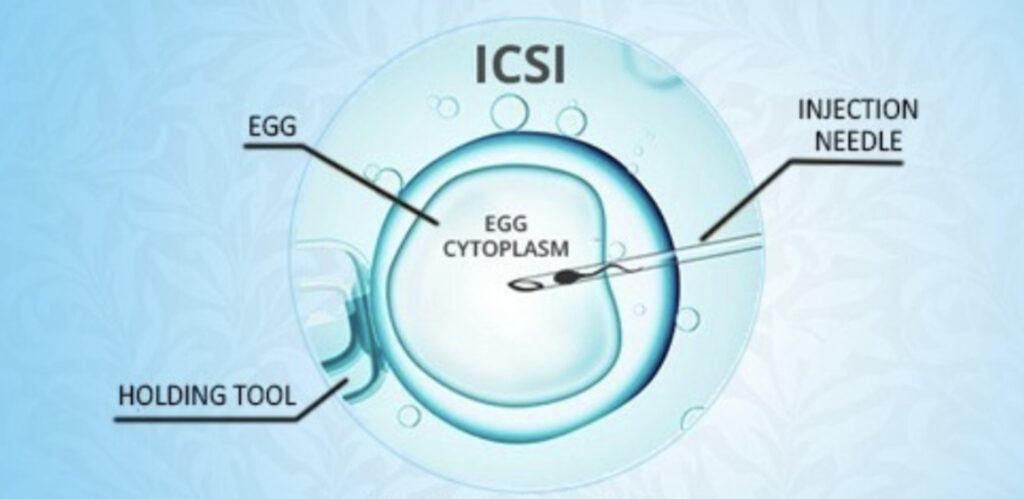
ICSI is a specialized form of IVF in which a single sperm is directly injected into a mature egg using advanced microscopic equipment. Unlike conventional IVF, where fertilization occurs naturally in a lab dish, ICSI bypasses several natural barriers to fertilization.
The procedure is performed by a highly trained embryologist using micromanipulation tools under a powerful microscope. Once fertilization occurs, the embryo is cultured in the laboratory and later transferred into the uterus.
ICSI was originally developed to treat severe male infertility but is now used in a wide range of fertility cases.
Who is an Ideal Candidate for ICSI?


ICSI is commonly recommended in the following situations:
- Low sperm count (oligospermia)
- Poor sperm motility (asthenozoospermia)
- Abnormal sperm morphology (teratozoospermia)
- Azoospermia requiring surgical sperm retrieval (TESA, PESA, TESE)
- Previous IVF fertilization failure
- Use of frozen sperm
- Unexplained infertility
- Advanced maternal age
- Fertility preservation cases
Doctors may recommend ICSI even when sperm parameters appear normal, especially if fertilization failure has occurred in a previous IVF cycle.
ICSI Procedure Step by Step (Complete Process):

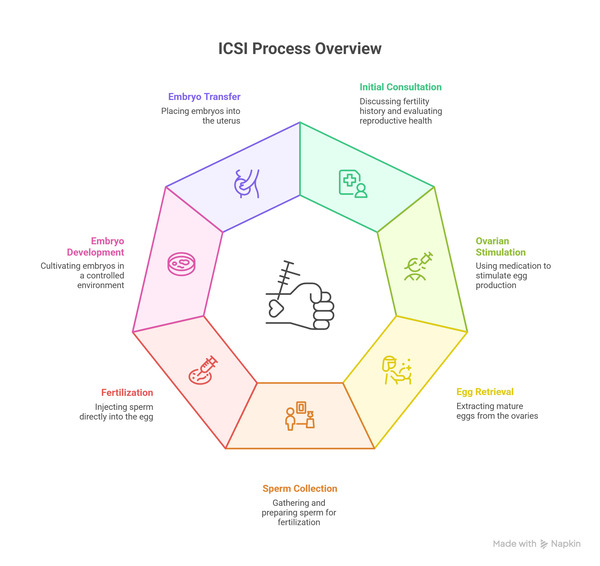
Step 1: Initial Consultation and Fertility Evaluation
The process begins with a detailed fertility assessment of both partners.
For the female partner:
- Hormone tests (AMH, FSH, LH, Estradiol)
- Transvaginal ultrasound
- Ovarian reserve testing
- Uterine evaluation
For the male partner:
- Semen analysis
- DNA fragmentation test (if required)
- Hormonal profile
These tests help doctors design a personalized stimulation and fertilization plan.
Step 2: Ovarian Stimulation
The female partner receives hormonal injections to stimulate the ovaries to produce multiple eggs in one cycle.
- Injections usually last 10–12 days
- Regular ultrasound and blood tests monitor follicle growth
- Final trigger injection is given to mature the eggs
This stage is crucial, as egg quality directly affects ICSI success.
Step 3: Egg Retrieval (Oocyte Pick-Up)

Egg retrieval is a short, minimally invasive procedure performed under mild anesthesia.
- Duration: 15–30 minutes
- Eggs are collected using a thin ultrasound-guided needle
- Recovery is usually same day
Most women experience mild cramping or bloating for 1–2 days.
Step 4: Sperm Collection and Preparation
Sperm can be obtained through:
- Ejaculation (fresh sample)
- Frozen sperm sample
- Surgical sperm retrieval (TESA / PESA / TESE)
The embryology lab selects the healthiest single sperm for injection.
Step 5: Fertilization via ICSI (Key Step)

This is the defining step of ICSI.
- Each mature egg is held with a micro-pipette
- One sperm is injected directly into the egg cytoplasm
- Eggs are placed in incubators for fertilization
Fertilization is checked after 16–18 hours.
Step 6: Embryo Development and Culture
Fertilized eggs are monitored for 3–5 days.
Embryo growth stages:
- Day 1: Fertilization confirmation
- Day 3: Cleavage-stage embryo
- Day 5: Blastocyst stage (preferred for transfer)
High-quality embryos are selected for transfer or freezing.
Step 7: Embryo Transfer
Embryo transfer is a painless, non-surgical procedure.
- Performed under ultrasound guidance
- Takes about 10–15 minutes
- No anesthesia required
Patients are advised to avoid strenuous activity for a few days.
“Also Read: “World’s first birth following conception with a fully automated remotely operated ICSI system.” Source: Eurekalert
ICSI Procedure Day-by-Day Timeline:
| Day | What Happens |
|---|---|
| Day 1 | Period begins, baseline ultrasound |
| Day 2–3 | Ovarian stimulation injections start |
| Day 6–10 | Follicle monitoring scans |
| Day 11–12 | Trigger injection |
| Day 13–14 | Egg retrieval |
| Day 14 | Sperm injection (ICSI) |
| Day 15–19 | Embryo culture |
| Day 19 | Embryo transfer |
| Day 28 | Pregnancy test |
ICSI Success Rate: What are the Chances?
ICSI success rates depend on multiple factors, primarily female age and egg quality.
ICSI Success Rate by Female Age
| Age Group | Average Success Rate |
|---|---|
| Below 35 | 50–60% |
| 35–37 | 40–45% |
| 38–40 | 30–35% |
| 41–42 | 20–25% |
| Above 42 | 10–15% |
Success rates may be higher with donor eggs.
ICSI Cost in India:
Average ICSI Cost Breakdown
| Expense Component | Estimated Cost (INR) |
|---|---|
| Basic ICSI cycle | ₹1.5–2.5 lakh |
| Medicines | ₹60,000–1,20,000 |
| Embryo freezing | ₹30,000–50,000 |
| Frozen embryo transfer | ₹40,000–60,000 |
| Surgical sperm retrieval | ₹20,000–40,000 |
City-Wise Cost Range
| City | Approximate Cost |
|---|---|
| Delhi / Mumbai | ₹2.5–3.5 lakh |
| Bengaluru / Chennai | ₹2–3 lakh |
| Ahmedabad / Pune | ₹1.8–2.8 lakh |
| Tier-2 cities | ₹1.5–2.2 lakh |
ICSI Side Effects on Mother
Common Side Effects
- Bloating
- Mild abdominal pain
- Mood swings
- Breast tenderness
- Fatigue
Possible Medical Risks
- Ovarian Hyperstimulation Syndrome (OHSS)
- Infection or bleeding after egg retrieval
- Emotional stress and anxiety
Most side effects are temporary and manageable under medical supervision.
Are There Any Risks to the Baby with ICSI?
Current research shows that most children born via ICSI are healthy. However:
- Slightly increased risk of genetic abnormalities linked to severe male infertility
- Higher chance of multiple pregnancies if multiple embryos are transferred
Pre-implantation genetic testing (PGT) can reduce risks.
ICSI vs IVF: Key Differences Explained
| Factor | ICSI | IVF |
|---|---|---|
| Fertilization method | Direct sperm injection | Natural fertilization |
| Best for | Male infertility | Tubal/unexplained infertility |
| Cost | Higher | Lower |
| Fertilization control | Very high | Moderate |
| Lab skill required | Advanced | Standard |
IVF or ICSI: Which One Should You Choose?
- IVF may be tried first if sperm quality is normal
- ICSI is preferred in male infertility or IVF failure
- Decision should be based on medical advice, not cost alone
Legal Guidelines for ICSI in India
Under the ART Act, 2021:
- Women: Up to 50 years
- Men: Up to 55 years
- Egg donors: 23–35 years
Only registered ART clinics can legally offer ICSI.
Medical Disclaimer: This article is for informational purposes only and does not substitute professional medical advice. Patients should consult qualified fertility specialists before starting ICSI treatment.
Conclusion:
Infertility can be an emotionally challenging phase, but advances in IVF treatment, IUI, and assisted reproductive technologies have created real hope for couples facing infertility symptoms, Male Infertility, or Unexplained Infertility.
Understanding key aspects such as IVF treatment injections, Embryo Transfer symptoms, and realistic expectations around IVF treatment cost helps patients feel more confident and prepared.
Medical science today focuses not only on procedures but also on holistic care, including nutrition and foods to increase fertility.
With early diagnosis, the right treatment plan, and expert medical support, many couples successfully achieve pregnancy.
Emotional strength, patience, and trust in the process play a vital role throughout the fertility journey. Each step forward, no matter how small, is progress toward parenthood.
Most importantly, no one is alone in this journey – support, science, and hope work together to make dreams of a family possible.
FAQs:
ICSI is an advanced form of IVF where a single sperm is directly injected into an egg to achieve fertilization.
ICSI is mainly recommended for couples facing Male Infertility, poor sperm quality, or previous IVF failure.
Success rates depend on age, egg quality, and health, but are generally higher in women under 35.
ICSI is recommended mainly for Male Infertility, low sperm count, or previous IVF fertilization failure.