

Many couples considering IVF in India specifically ask whether it is possible to check or confirm the gender of a baby boy during IVF treatment.
This curiosity often increases after repeated infertility symptoms, male infertility diagnosis, or multiple failed treatment cycles.
Medically, a baby’s gender can only be identified through genetic testing of the embryo, such as preimplantation genetic testing (PGT). However, in India, checking or selecting a baby’s gender through IVF or ICSI treatment is strictly prohibited under the PCPNDT Act.
Fertility specialists are legally allowed to use PGT only for identifying serious genetic disorders – not for revealing or choosing a boy or girl.
Even procedures involving IVF injections, embryo grading, or advanced laboratory techniques do not provide legal access to gender information.
Therefore, while the science exists to identify gender, checking for a boy via IVF in India is not permitted, making ethical and legal compliance central to fertility care.
This article explains the real chances of having a boy with IVF in India, what science suggests, what the law allows, and what couples should realistically focus on during treatment.
Understanding How a Baby’s Gender Is Determined:
A baby’s gender is decided at the time of fertilization:
- X chromosome (sperm) + X egg = girl
- Y chromosome (sperm) + X egg = boy
The egg always contributes an X chromosome, while the sperm determines the gender. This biological process remains the same whether conception happens naturally or through IVF.
Even in advanced procedures like ICSI treatment (Intracytoplasmic Sperm Injection), the doctor selects a healthy sperm for fertilization—not its chromosome type.
Haryana government has tightened IVF regulations, requiring couples who already have a daughter to obtain prior approval before attempting a second child through IVF. The move aims to address concerns over the declining sex ratio and prevent misuse of assisted reproductive technologies for gender selection. Times of India
Is It Legal to Choose a Baby Boy Through IVF in India?
Clear Legal Position Under the PCPNDT Act
In India, direct gender selection through IVF is illegal. The PCPNDT Act strictly prohibits:
- Using Preimplantation Genetic Testing (PGT) for non-medical gender selection
- Selecting embryos based on sex for family balancing or preference
This law exists to prevent skewed sex ratios and eliminate gender-based discrimination.
Ethical Responsibility of IVF Clinics
Reputed IVF centers in India focus on:
- Treating male infertility, female infertility, and unexplained infertility
- Achieving successful implantation and a healthy pregnancy
- Ethical medical practice rather than gender preference
Does IVF Naturally Increase the Chances of Having a Boy?
What Some Studies Suggest:
Some international studies from the early 2010s observed a slight male bias (around 53–56%) in IVF births compared to natural conception, which averages about 51% male births.
Possible reasons include:
- Faster development of male embryos
- Timing of embryo transfer (especially blastocyst transfer)
Conflicting Research Findings:
Other studies have shown:
- No significant difference in gender ratios
- In some cases, fewer male births after IVF compared to natural conception
This conflicting data confirms one key fact: IVF does not reliably or intentionally increase the chances of having a boy.
The Reality Remains Close to 50/50:
Without illegal intervention, the probability of having a boy or girl through IVF remains nearly equal.
Dr. Nishi Singh, Head of Fertility at Prime IVF, said, “Science has advanced in identifying a child’s gender during IVF, especially with PGT, but ethical concerns are crucial, and not all countries allow gender selection. Source: Hindustan Times
IVF Is About Treating Infertility, Not Gender Selection:
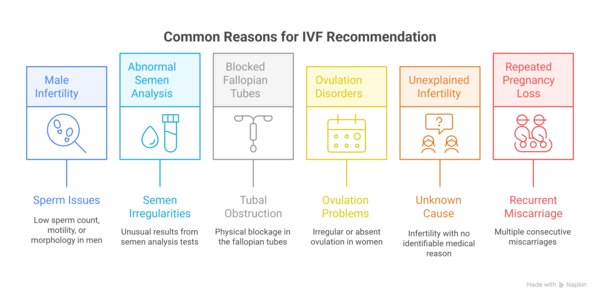
IVF is recommended when couples face issues such as:
- Male infertility (low sperm count, motility, or morphology)
- Abnormal semen analysis results
- Blocked fallopian tubes or ovulation disorders
- Unexplained infertility
- Repeated pregnancy loss
The IVF process includes ovarian stimulation using IVF injections, egg retrieval, fertilization, and embryo transfer—all focused on achieving pregnancy, not influencing gender.
Role of ICSI Treatment in IVF Gender Outcomes:
ICSI treatment is widely used in India, especially in cases of severe male infertility. While ICSI involves injecting a single sperm into an egg, doctors do not select sperm based on gender.
Scientific data does not support the claim that ICSI guarantees or intentionally increases male births.
Can PGT Be Used for Gender Selection?
Allowed Uses of PGT in India:
PGT is permitted only for medical reasons, such as:
- Detecting serious genetic disorders
- Preventing transmission of sex-linked diseases
What Is Not Allowed:
- Choosing a boy or girl for social or personal reasons
- Family balancing or cultural preference
Any misuse of PGT for gender selection is illegal.
Common Myths About Having a Boy Through IVF:
Myth 1: IVF guarantees a boy
Fact: IVF does not control gender
Myth 2: Doctors can choose embryo gender
Fact: This is illegal in India
Myth 3: ICSI produces more boys
Fact: No reliable scientific proof supports this
Emotional and Social Pressure Around Gender Preference:
Many couples experience emotional stress due to:
- Family expectations
- Social pressure
- Misconceptions about IVF outcomes
Fertility specialists emphasize counseling and education to help couples focus on health rather than gender.
What Couples Should Focus on During IVF Treatment:
Instead of worrying about gender, couples should prioritize:
- Identifying infertility symptoms early
- Timely diagnosis through tests like semen analysis
- Lifestyle changes, including balanced foods for infertility
- Understanding treatment costs, such as egg freezing cost
- Exploring government schemes or hospital programs offering free IVF treatment (where eligible)
A healthy pregnancy outcome is always the primary goal.
Healthy Baby Priority:
In simple terms, you cannot legally choose a baby boy through IVF in India, as gender selection is strictly banned by law.
IVF may show small natural gender differences in some cases, but these variations are unpredictable and cannot be controlled.
Biologically, the chances of having a boy or a girl through IVF remain close to 50/50, just like natural pregnancy.
IVF and ICSI are medical treatments created to help couples overcome infertility, not to decide a baby’s gender. Indian laws and medical ethics strictly guide fertility clinics to use these technologies responsibly.
Doctors focus on embryo health, pregnancy success, and the mother’s well-being rather than gender outcomes. In the end, a healthy baby and a safe pregnancy are always more important than gender preference.
Medical & Legal Disclaimer: This article is for informational purposes only and does not promote or support gender selection. Couples should consult a certified fertility specialist for personalized medical advice in accordance with Indian laws.
FAQs:
No, choosing a baby’s gender through IVF is illegal in India.
Gender selection is strictly banned for non-medical reasons under Indian law.
No, doctors are not allowed to reveal or determine baby gender during IVF.
IVF may show minor natural variations, but it does not reliably increase boy baby chances.
The chances remain close to 50%, similar to natural conception.
It is banned to prevent gender imbalance and stop discrimination against female children.
Embryo quality affects pregnancy success, not baby gender.
No, IVF injections only stimulate egg production and do not affect gender.
Baby gender is decided by the sperm chromosome, not the egg.
No, gender checking at any IVF stage is illegal in India.
No food can change or control the baby’s gender.
Couples should focus on embryo health, pregnancy success, and maternal well-being.